

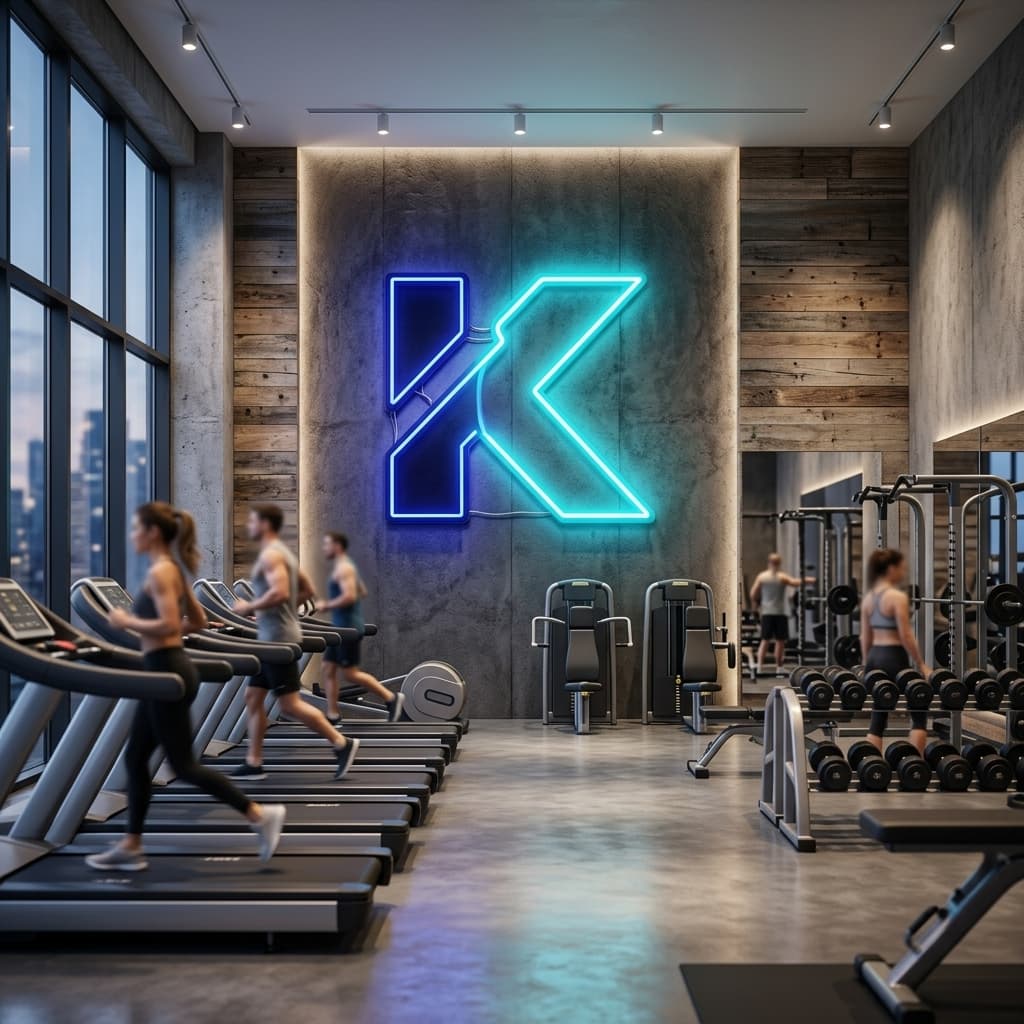
We have all been there. The calendar turns to January, or a Monday morning rolls around, and you feel that sudden surge of motivation. You drive to the nearest high-end fitness center, meet with a charismatic sales representative, and sign on the dotted line for a twelve-month membership. You purchase the fancy gear, pack your gym bag with enthusiasm, and go every day for the first week.
By week three, the enthusiasm fades. By month two, the gym visits dwindle to once a week. By month three, you are paying a monthly fee for a facility you haven't stepped foot in for weeks. Statistically, you are not alone: studies reveal that approximately 67% of all gym memberships go completely unused. In behavioral economics, this is known as the "choice-supporting bias" or the "projection bias"—we overestimate our future self-discipline at the moment of purchase.
But here is the industry secret: the failure to maintain a fitness habit is rarely just a lack of willpower. More often, it is a failure of environment design. You chose the wrong gym. Selecting a gym is not merely about finding a room filled with heavy metal; it is about choosing a community, a schedule, and a space that minimizes friction and maximizes motivation. In this comprehensive guide, we will unpack the science-backed, practical steps to choosing the right fitness facility that matches your lifestyle, budget, and long-term goals.
1. The 10-Minute Commute Rule: Eliminating Friction in Behavior Design
In behavioral psychology, "friction" refers to any obstacle that makes it harder to perform a habit. Distance is the ultimate friction. When you are feeling highly motivated, a 25-minute drive to a premium gym seems trivial. But when you are exhausted after a ten-hour workday, that same 25-minute drive becomes an insurmountable barrier.
The 10-Minute Commute Rule: To build a sustainable fitness routine, your chosen gym must be located within a 10-to-15-minute radius of either your home or your workplace. Anything further, and your likelihood of consistent attendance drops by over 50%. The path of least resistance always wins in the long run.
Practical Commute Evaluation:
- The Morning Workouter: If you train before work, the gym must be within 10 minutes of your home, or directly on your route to the office.
- The Lunch-Hour Trainer: The gym must be within walking distance (under 5 minutes) of your office to allow time for changing, working out, showering, and returning within an hour.
- The Evening Warrior: The gym should be on your commute home, forcing you to pass it before you have the chance to sit on your couch and succumb to inertia.
2. Deconstructing the "Annual Contract Trap": The Cost of False Commitment
Walk into any commercial gym, and the pricing structure is almost always designed to push you toward a long-term commitment. Monthly memberships might be priced at $100 per month, while an annual contract is offered at "only" $50 per month. The mathematical appeal is obvious, but it is a classic trap.
Commercial gyms build their business models on "breakage"—the percentage of members who pay but never attend. If every single registered member of a major gym showed up on a Monday evening, the facility would violate local fire codes. They oversell memberships because they count on you dropping out.
How to Make a Smart Financial Decision:
- Insist on a Trial or Short-Term Membership: Never sign a long-term contract without testing the gym for at least 30 days. Pay the higher monthly rate first; think of it as an insurance premium against a bad decision.
- Analyze the Cancellation Policy: Read the fine print. Does the contract require a 30-day or 60-day written cancellation notice? Is there a relocation clause if you move? Are there high cancellation fees?
- Beware of Annual Enhancement Fees: Many gyms charge a hidden "facility enhancement fee" once or twice a year, which is billed automatically and not included in the advertised monthly price.
3. The "Peak Hour Test": Timing Your Critical Visit
Evaluating a gym at 10:00 AM on a Thursday is a recipe for disappointment. The facility will be pristine, empty, and quiet. If you plan to train during peak hours—typically 5:30 PM to 8:00 PM on weekdays—you must evaluate the gym during those exact times before signing any agreement.
A gym's personality changes entirely during peak hours. An empty gym is a sanctuary; a crowded gym can feel like a stressful, chaotic battleground. During your peak hour visit, look for these specific factors:
A. Equipment Availability and Waiting Lines
Are people hovering around the squat racks and bench presses like vultures? If you have to wait 10 to 15 minutes between sets because there are not enough barbells or dumbbells, your workout momentum is ruined, and your stress levels will spike.
B. The Free Weight Footprint
Is the free weight area so cramped that you are constantly dodging other people's elbows? A cramped dumbbell area is not just annoying; it is a safety hazard.
C. Air Quality and Climate Control
When the gym is full of active bodies, does the air feel stuffy, hot, and humid? A gym with poor ventilation and weak air conditioning will quickly lead to fatigue and a miserable workout experience.
4. Facility Specialization: Matching Gear to Your Training Methodology
Not all fitness spaces are created equal. A gym with 50 treadmills but only one squat rack is useless to a powerlifter, while a hardcore barbell club with chalk-covered floors might be intimidating and unsuited for someone looking for general health maintenance or prenatal yoga.
Consider your primary training goals and inspect the facility for its matching zones:
A. The Strength and Hypertrophy Zone
If building muscle is your goal, look for high-quality, adjustable cable machines, a wide range of dumbbells (ideally duplicating the popular weights), and sturdy, adjustable benches. Brands like Hammer Strength, Eleiko, or Life Fitness are industry-standard indicators of quality.
B. The Cardiovascular and Aerobic Zone
Look for modern cardio machines that feature working personal screens, functional heart-rate monitors, and diverse options (e.g., stair climbers, rowers, assault bikes) rather than just standard treadmills.
C. The Functional and Boutique Space
For those interested in HIIT, CrossFit, or mobility work, the gym should have dedicated open turf spaces, kettlebells, medicine balls, battle ropes, and suspension trainers (like TRX).
5. Gym Culture and the "Tribe" Effect
Culture is the invisible force that either pulls you back to the gym or pushes you away. In behavioral health, finding a "tribe"—a group of like-minded individuals who share your goals—is one of the strongest predictors of long-term adherence.
Consider which cultural environment aligns with your personality:
- The Big Box Commercial Gym: Low interaction, highly anonymous, self-guided. Great if you want to put in your headphones, do your work, and leave.
- The Boutique Specialty Studio: High interaction, community-focused, instructor-led (e.g., Barry's, OrangeTheory, local Yoga or Pilates studios). Excellent for people who need external motivation, structured classes, and social accountability.
- The Hardcore Strength Club: Community-oriented, loud, intense. Best for serious lifters who appreciate chalk, loud music, and mutual encouragement.
6. Cleaning Protocols and Equipment Maintenance: Safety First
A gym is a shared space where hundreds of people sweat on the same surfaces daily. Proper hygiene is a matter of basic health. When touring a gym, inspect these hygiene indicators:
- Sanitation Stations: Are there easily accessible spray bottles and paper towels (or disinfectant wipes) distributed throughout the gym? Do you actually see members using them to wipe down equipment after use?
- Locker Room and Shower Hygiene: Walk through the locker rooms. Are the showers clean, mold-free, and well-ventilated? Is there hot water and working locks on the lockers?
- Equipment Wear and Tear: Look closely at the cables on the pulley machines. Are they frayed? Are the vinyl pads on the benches cracked or taped together? A gym that neglects basic equipment maintenance is likely neglecting safety standards as well.
- Air Exchange Rate: Ensure the facility has a dedicated Fresh Air Intake System and not just standard split AC units that recirculate stale air.
7. 5 Common Mistakes to Avoid When Choosing a Gym
Drawing from years of coaching experience, here are the most frequent blunders people make when selecting a fitness facility:
- Choosing Based on Instagram Aesthetics: Don't buy a membership just because the gym has perfect lighting for selfies or a trendy juice bar. Aesthetic gyms often charge a massive premium for amenities that do not contribute to your actual physical fitness.
- Ignoring the Total Cost of Attendance: Calculate the full cost. Factor in parking fees, lockers, towel service, initiation fees, and the cost of fuel/time spent commuting. A "cheap" $30/month gym might end up costing $100/month in hidden expenses.
- Failing to Verify Coach Credentials: If you plan to work with a personal trainer, ask about their certifications. Look for accredited organizations like NASM, ACSM, NSCA, or ACE. Avoid gyms that employ trainers based solely on their physical appearance rather than their coaching credentials.
- Assuming All Class Schedules are Static: Gyms frequently change their group fitness schedules. If you are joining specifically for a 6:00 AM Spin class, verify that the class is a permanent fixture of the schedule and not a temporary trial.
- Signing Under High-Pressure Sales: Gym sales reps often use high-pressure tactics, like "this promotion expires today." Take a breath, walk away, and think about it overnight. A good gym will still accept your money tomorrow.
8. Comparison Matrix: Finding Your Fitness Fit
To help you weigh your options, this comparison table breaks down the pros and cons of different fitness facility models:
| Feature | Big Box Commercial Gym | Boutique Specialty Studio | Multi-Location Fitness Platform (e.g., Kaimen) |
|---|---|---|---|
| Equipment Variety | Excellent selection of machines and weights | Limited to class-specific gear | Unlimited (Access to all types of venues) |
| Geographic Flexibility | Restricted to a single branch or chain | Single location restricted | Maximum flexibility (Work out anywhere near home or work) |
| Community & Coaching | Low personalized attention; self-directed | High community vibe; guided coaching | Dynamic (Choose a community-centric studio or gym as desired) |
| Financial Lock-in | High (Long-term contracts, cancellation fees) | Moderate (Expiring class packs) | None (Flexible monthly subscriptions) |
| Routine Variety | Repetitive (Same gym floor every day) | Monotonous (Only yoga, or only cycling) | High (Cardio today, Pilates tomorrow, swim on Friday) |
9. Your Actionable 4-Step Gym Selection Checklist
Follow this checklist to systematically find the perfect gym:
- Step 1: Map your location. Identify every gym and fitness studio within a 10-minute commute of your home and workplace.
- Step 2: Secure a guest pass. Do not just tour; schedule a trial workout. Many quality gyms offer a free 1-day or 3-day guest pass.
- Step 3: Test during peak hours. Perform your planned workout at the exact time you intend to train on a weekly basis.
- Step 4: Audit the facility and contracts. Check the cleaning sprays, inspect the locker rooms, ask about hidden fees, and read the cancellation terms before signing.
Frequently Asked Questions (FAQs)
Q1: Is a more expensive gym membership worth it?
A: Only if you actually utilize the premium amenities. If you value features like a steam room, towel service, premium shampoo, and uncrowded workout floors, and if these features make you look forward to visiting the gym, then it is a worthwhile investment. However, if your goal is strictly heavy lifting or basic cardio, a budget-friendly gym with well-maintained equipment is more than sufficient.
Q2: How can I tell if a gym is overcrowded?
A: Visit the gym on a Monday or Tuesday evening between 6:00 PM and 7:30 PM. If the parking lot is completely full, if there are lines for the treadmills and squat racks, and if the air feels humid and warm, the gym is overcrowded. Monday evenings are universally the busiest times for any gym; if it is manageable then, it will be manageable anytime.
Q3: What should I look for in a personal trainer at a new gym?
A: Look for national certifications (NASM, ACSM, NSCA, ACE) and a degree in Exercise Science or Kinesiology. A good trainer will conduct a thorough movement assessment, ask about your medical history, and listen to your goals before programming. Avoid trainers who give everyone the exact same workout or prioritize high-intensity fatigue over proper form.
Q4: How do I overcome "gym intimidation" as a beginner?
A: Remember that almost everyone at the gym is focused entirely on their own workout, mirror, or phone. Wearing comfortable clothes, creating a solid music playlist, and going with a plan of exactly which exercises you will perform can help reduce anxiety. You can also start by attending small group classes or working out during off-peak hours (like mid-afternoon or late evening) to build confidence.
Q5: Should I choose a specialized studio (like CrossFit or Pilates) over a general gym?
A: It depends on your fitness goals and personality. If you struggle with self-motivation and want structured, community-driven, and coach-led workouts, a specialty boutique studio is a great choice. If you prefer working out independently, require a wide variety of resistance machines, and want to follow your own customized program, a general commercial gym is better.
Q6: What is a "facility fee," and is it normal?
A: A facility fee (or maintenance fee) is a common charge in the commercial gym industry. It is typically billed once or twice a year, ranging from $30 to $50, in addition to your monthly dues. Gyms claim these fees go toward upgrading and repairing equipment. Always ask about this fee during signup so you can factor it into your annual budget.
Recommended Reading (Internal Links):
- The Scientific Link Between Physical Fitness and Workplace Productivity
- 5 Actionable Strategies to Prevent Workplace Burnout and Reclaim Energy
- The Real Cost of Employee Turnover: How Wellness Programs Protect Your Bottom Line
- The HR Director's Guide to Designing a High-Engagement Corporate Wellness Program
- Daily Habits for Sustainable Health, Focus, and Chronic Stress Reduction
Conclusion: The Future of Fitness is Flexible
Choosing a gym is an investment in your health, but it shouldn't feel like a cage. The traditional model of lock-in annual contracts and single-location memberships is increasingly out of step with the modern, flexible lifestyle. When you commit to a single gym, you lose the freedom to adapt to changes in your schedule, commute, or fitness interests.
This is where modern wellness platforms like Kaimen are changing the game. Kaimen offers the ultimate alternative to the single-gym lock-in. Instead of paying a large upfront sum to one facility, a single Kaimen subscription gives you flexible access to a massive network of gyms, CrossFit boxes, yoga studios, Pilates centers, padel courts, and swimming pools across Egypt. You can do a heavy strength workout near your office on Monday, attend a relaxing yoga class near your home on Wednesday, and play padel with friends on Friday. Kaimen adapts to your life, not the other way around. Experience the freedom of zero long-term contracts and infinite variety, and find your fitness home wherever you go.