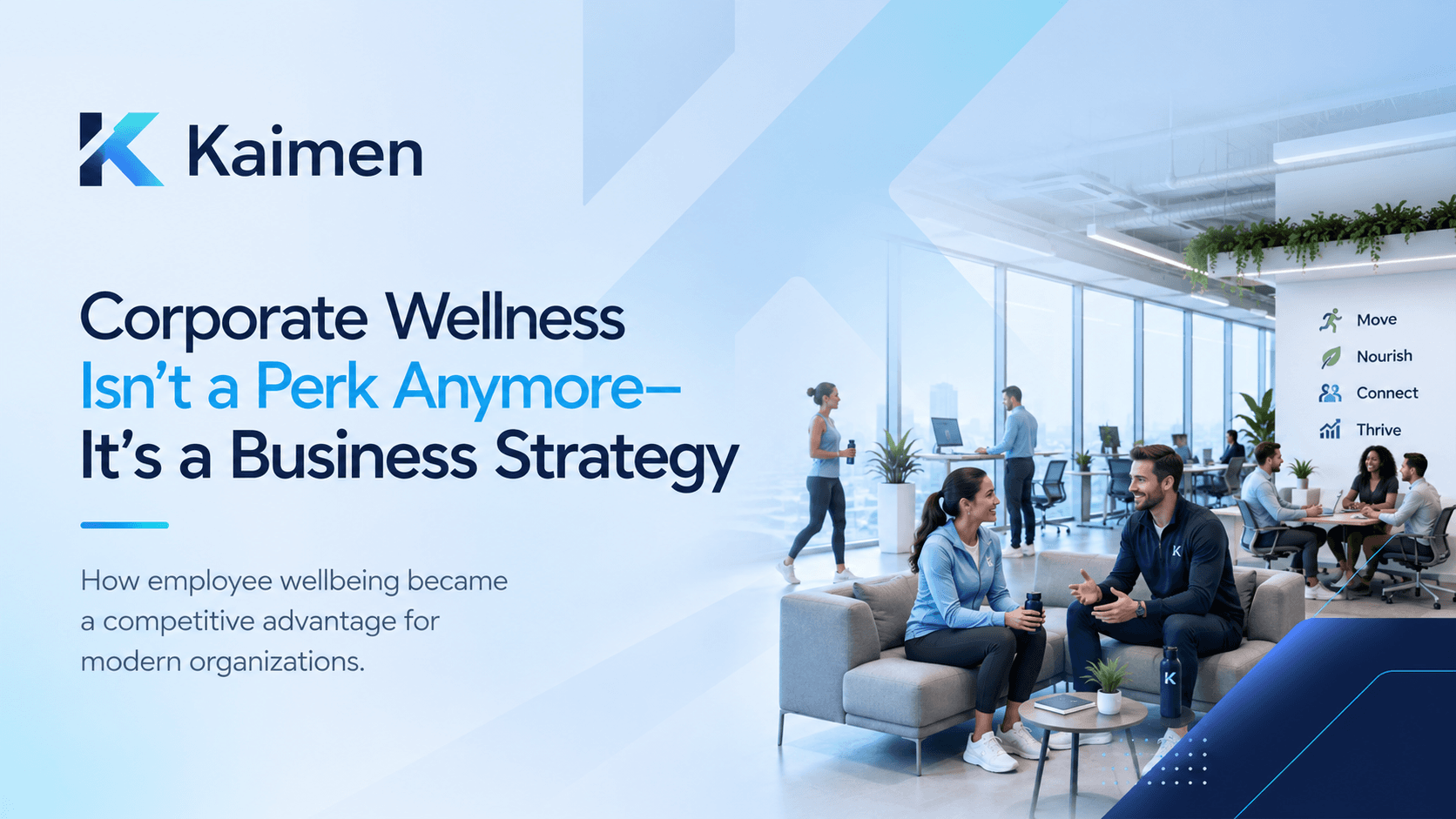
The modern workplace is facing an unspoken crisis of quiet exhaustion.
We have all seen the cycle. An organization notices rising stress levels, declining engagement, or a sudden spike in turnover. The immediate response? A well-intentioned initiative: a Friday pizza party, a subscription to a meditation app, or a poster in the breakroom about stress management.
Yet, Monday arrives, the workloads remain unchanged, the systemic stressors persist, and the cycle continues.
For years, corporate wellness was treated as a "nice-to-have" benefit — a checkbox on an HR onboarding document designed to make a company look attractive to prospective hires. It sat in the same category as office ping-pong tables and free snacks: superficial perks that look great on recruitment brochures but do little to impact the actual health, happiness, or retention of a workforce.
Today, that approach is no longer just ineffective; it is a business risk.
The New Reality of Workplace Wellbeing
The relationship between employers and employees has fundamentally shifted. The boundaries between professional and personal lives have blurred, and with that shift, the expectations of the workforce have evolved.
Employees are no longer willing to sacrifice their mental, physical, or emotional health for a paycheck. According to global workplace studies, burnout is at an all-time high, and a significant percentage of professionals cite workplace stress as a primary reason for seeking new opportunities.
When wellbeing is treated as an afterthought, the business pays the price in very tangible ways:
- Absenteeism and Presenteeism: Employees taking frequent sick days is costly, but "presenteeism" — where employees are physically present but mentally checked out — is often far more damaging to productivity and morale.
- The Cost of Turnover: Replacing a skilled employee is vastly more expensive than retaining one. In a highly competitive talent market, organizations that fail to support their people lose them to competitors who do.
- Declining Innovation: Creative problem-solving and strategic thinking require cognitive bandwidth. A stressed, exhausted workforce cannot innovate; it can only survive.
The Business Case: From Cost Center to Value Driver
To secure buy-in from the C-suite, wellness initiatives must speak the language of business value. When designed correctly, a comprehensive wellbeing strategy directly influences key performance indicators:
- Retention and Talent Acquisition: Top talent does not just look at salary; they look at the ecosystem they will be entering. A company that actively demonstrates a commitment to employee health immediately stands out. It becomes an employer of choice, reducing recruitment costs and building a highly loyal workforce.
- Sustained High Performance: Physical movement, proper rest, and mental clarity are the ultimate performance enhancers. Employees who have the time and resources to care for their physical health show sharper focus, higher energy levels, and better decision-making capabilities throughout the workday.
- A Culture of Trust: When an organization actively invests in its employees' lives outside of work hours, it builds psychological safety and mutual respect. This trust is the foundation of a strong, collaborative workplace culture.
Why the "One-Size-Fits-All" Approach Fails
The answer lies in a lack of personalization. A modern workforce is diverse:
- A young developer might want high-intensity functional training to decompress after a long coding sprint.
- A working parent might need a yoga class that fits into a tight thirty-minute window during their lunch break.
- An older executive might prioritize low-impact mobility training or wellness therapies.
When you offer a single, rigid solution, you inevitably exclude a massive portion of your team. The result? Low engagement rates, wasted budget, and a growing disconnect between leadership's intentions and the employees' reality.
What Modern Wellbeing Actually Looks Like
To build a program that employees actually use — and benefit from — leaders must focus on three core pillars:
- Flexibility: Work schedules are no longer uniform, and wellness routines should not be either. Employees need solutions that adapt to their lives, whether they are working from the office, from home, or traveling.
- Accessibility: Barriers to entry must be eliminated. If accessing a wellness benefit requires complex reimbursement processes, long commutes, or rigid scheduling, adoption will plummet. It must be as simple as tapping an app on a phone.
- Autonomy and Choice: The most successful wellness programs are those that empower the individual. When you give employees the autonomy to choose how, where, and when they take care of their health, you foster genuine engagement.
A New Framework for Corporate Health with Kaimen
At Kaimen, we look at this challenge through a practical lens. We believe that an organization's greatest asset is its collective energy.
When we partner with companies, our goal is not simply to provide a list of gyms. It is to help leaders build an infrastructure of vitality. By giving teams decentralized, flexible access to a massive network of fitness, movement, and lifestyle spaces, we remove the friction of staying active.
We are not just helping companies offer a benefit; we are helping them build a culture where prioritizing health is normalized, supported, and sustainable.
Actionable Takeaways for Leaders
- Audit Your Current Offerings: Look honestly at your utilization rates. If you are paying for services your team is not using, it is time to pivot toward flexible, choice-driven solutions.
- Lead from the Front: Culture is defined by behavior, not policies. If executives work through burnout and never utilize wellness benefits, employees will assume they should not either.
- Decentralize the Experience: Shift away from single-partner systems. Give your team a portfolio of options that cater to different fitness levels, locations, and personal preferences.
- Measure What Matters: Instead of just tracking signup rates, ask your team: Do you feel supported by our wellness initiatives? Do you have the flexibility to care for your health?
The Bottom Line
The future of work belongs to organizations that understand that human sustainability is a prerequisite for financial sustainability. You cannot build a high-performing business on a foundation of depleted people.
To my fellow leaders and HR professionals: how has your team's expectation of workplace wellness changed over the past few years? What is the biggest barrier you face in building a healthy company culture?